

The Gill Center for Plastic Surgery & Dermatology
121 Vision Park Boulevard, Suite 100
Shenandoah, TX 77384
Phone: (832) 430-1735
Mon-Thurs: 8 a.m. – 4:30 p.m.
Friday: 8 a.m. – 2 p.m.
Why Our Surgical and Care Team at The Gill Center Is Different
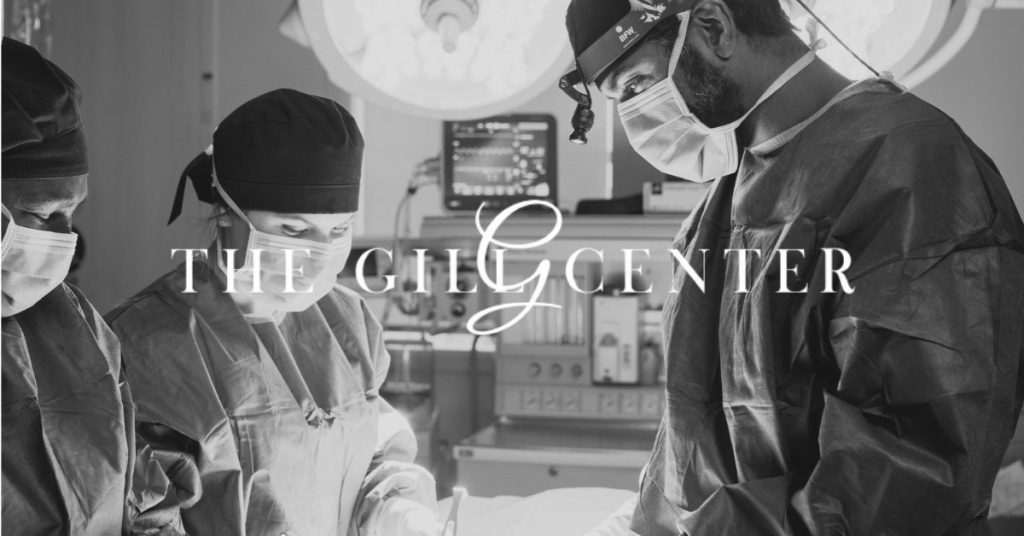
When patients are researching a plastic surgeon in The Woodlands, they usually focus on before and after photos, procedure names, and reviews. Those things matter, and I understand why people start there. But what most patients don’t realize until they’ve done deeper research is that outcomes in plastic surgery are heavily shaped by something less visible and far less discussed: the team standing in the operating room with you.
Not All Operating Rooms Are the Same
There’s a widespread assumption that an office-based surgery center is somehow less capable or less safe than a hospital setting. I’ve heard that concern from patients, and I respect it because it comes from a reasonable place. The truth is, that assumption doesn’t hold here.
Our private surgery center is built to hospital-grade standards in every meaningful way: the equipment, the sterility protocols, the safety systems, and the oversight structure. We didn’t cut corners to make outpatient surgery more convenient. We built something that meets or exceeds what you’d find in a hospital operating room because that’s the standard our patients deserve.
But the equipment is honestly not what sets us apart. The people are.
I personally selected our anesthesia team, and that selection was deliberate and non-negotiable. These are cardiac-trained anesthesiologists, not rotating providers pulled from a hospital staffing pool. There are only a handful of them, and they work with me on a consistent, ongoing basis. They know my techniques, they understand how I communicate in the operating room, and they anticipate the next step without needing to be told.
In many hospital settings, particularly during longer procedures like a mommy makeover, facelift, or tummy tuck, patients may have multiple anesthesia providers rotating through the same surgery. Nurses rotate. Surgical technicians rotate. The team in the room at the start of your procedure may not be the same team present at the close. That kind of inconsistency is normalized in large hospital systems, but it introduces variables that I’ve never been willing to accept.
I think about our team the way I think about a championship roster. Even a highly skilled individual performs at a higher level when surrounded by teammates who know the system, have trained together, and have built genuine trust. That shared familiarity improves communication, sharpens efficiency, and most importantly, it improves safety in ways that are hard to quantify but impossible to ignore.
My Training Shapes the Standards We Hold
My surgical training began at the Texas Medical Center, which is the largest medical center in the world. I trained in high-volume trauma environments at Memorial Hermann and Charity Hospital, and I had significant exposure to complex cancer reconstruction at MD Anderson. That kind of training does something to your surgical instincts that is difficult to replicate any other way.
You stop thinking about complications as things that happen to you and start thinking about them as variables you plan around before the first incision. You build your entire approach around anticipation rather than reaction. That philosophy carries into every procedure I perform in The Woodlands, whether it’s a mommy makeover, a breast revision, a facelift, or a tummy tuck. A consistently successful outcome is never accidental. It is always the product of planning.
Under 1 Percent Complication and Revision Rates
We’re proud of our complication and revision rates, both of which sit at under approximately one percent. Getting to that number and staying there requires discipline at every stage of the patient experience, not just in the operating room.
It starts well before surgery with thorough, honest pre-operative education. We invest significant time helping patients understand their options and make genuinely informed decisions. Procedure selection matters enormously, and not every patient is a candidate for every procedure. Sometimes the most responsible thing we can do involves adjusting expectations, modifying a surgical plan, or having a direct conversation about why a particular approach isn’t the right fit. Saying no when it’s the right answer is part of how we protect our patients and our outcomes.
Surgeon-Led Follow-Up Care
After surgery, I see my patients personally. Our nurse practitioners and nurses are deeply integrated into the surgical process and are not rotating staff who are unfamiliar with your history or your procedure. We provide structured written instructions, detailed verbal education, and a follow-up schedule designed to keep a close eye on your recovery and catch anything that needs attention early.
A significant portion of complications in plastic surgery trace back to gaps in communication or inconsistent post-operative follow-up rather than anything that happened in the operating room. We have built our entire aftercare structure around closing those gaps.
Experience Matters in Complex Procedures
Over the last 20 years, I’ve performed approximately 2,000 or more mommy makeovers, 2,000 or more breast revision surgeries, and between 400 and 500 facelifts. We regularly care for patients from across Texas, from other parts of the United States, and internationally from Europe, Africa, and Australia. The majority of those patients found us because someone they trusted had surgery here first, which is the kind of referral pattern that only develops when outcomes are consistently good over a long period of time.
Experience alone is never enough to guarantee results, but experience combined with disciplined systems and a stable, practiced surgical team creates a compounding advantage that shows up in outcomes over time.
Why This Matters When Choosing a Plastic Surgeon in The Woodlands
When you’re choosing a board-certified plastic surgeon for a mommy makeover, tummy tuck, facelift, or breast augmentation, you’re making a decision that goes well beyond selecting a procedure. You’re choosing the depth of your surgeon’s training, the quality and consistency of your anesthesia team, the safety standards of the facility where you’ll have surgery, the experience level of everyone in that operating room, and the structure of the care you’ll receive during recovery.
At The Gill Center, we built an environment that is controlled, consistent, and oriented around long-term results rather than volume or convenience. My philosophy has always been to make informed, educated decisions on behalf of our patients in ways that support lasting outcomes, and that philosophy applies just as much to who stands beside me in the operating room as it does to how I operate.
Our patients trust us with complex breast revisions, extensive mommy makeovers, and deep plane facelifts because they’ve come to understand that the surgery is only part of what we’re offering. The system behind it is what makes the difference.
* All information subject to change. Images may contain models. Individual results are not guaranteed and may vary.
Leave a Reply